
House Rendering That Protects Your Home From Coastal Weather
We re-render whole houses across Blackpool, Cleveleys and the Fylde Coast in K-Rend, Weber or traditional sand and cement, with free written quotes and most jobs done in 3 to 7 days.
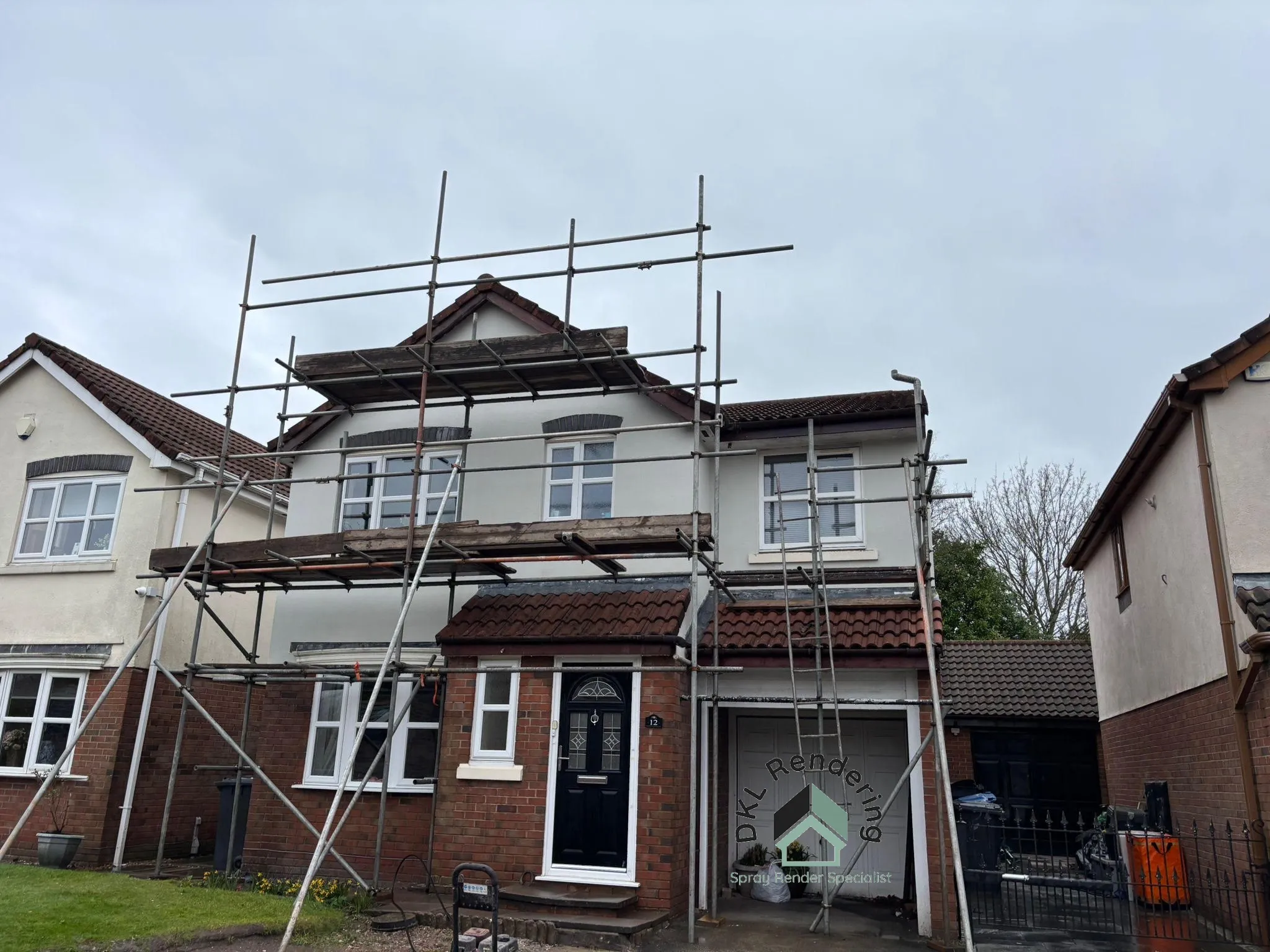
House Rendering Done Properly
House rendering is a protective coat over the outside walls of your home, finished smooth or textured and either coloured all the way through or painted after. Done right, it does two jobs at once: it seals the brickwork against the weather and it decides how the whole house looks from the street. Done badly, it cracks, stains and lets water in, which is why who renders your house matters as much as what goes on it.
Round here, most calls come down to the same few things. Tired pebbledash or roughcast that dates the house and has started to work loose. Cracked render letting damp through into the rooms behind. Or a home that's structurally fine but looks worn out next to the freshly rendered one two doors down. A full re-render sorts all three: the old finish comes off, the walls get sorted, and a modern system goes on.
We're DKL Rendering, based in Thornton-Cleveleys and rendering houses along the Fylde Coast for over 15 years. We work with K-Rend, Weber and traditional sand and cement, spray-applied where the system suits it, and we're plasterers as well, covering internal and external plastering and skimming. If you've been searching renderers near me or ringing round rendering companies, here's our offer: fully insured, free written quotes usually within 48 hours, and most houses done in 3 to 7 days.
- Full re-renders, from stripping the old finish to the final coat
- K-Rend, Weber and traditional sand and cement systems
- Spray-applied silicone and monocouche for an even finish
- Over 15 years rendering houses on the Fylde Coast
- Fully insured, with free written quotes usually within 48 hours
- Most houses done in 3 to 7 days
Which Render Is Right for Your House
Silicone is the dearest of the three and the one we fit most. K-Rend is the brand people ask for by name: a flexible, self-cleaning finish where the colour runs through the render, so there's no paint to peel and rain washes the dirt off as it falls. Fitted properly it lasts 25 to 30 years, and on exposed coastal walls that flexibility is what stops the cracking that kills cheaper finishes.
Monocouche is the middle option and often the better-value one. It's a one-coat render, through-coloured like silicone, so there's no repainting, and it usually comes in cheaper. What you give up is some flexibility and the self-cleaning surface, so it suits sheltered houses better than seafront gables. Plenty of homes a few streets back from the coast are ideal for it, and we'll say so when they are.
Traditional sand and cement is the budget route. It's the render most older houses round here already have, it costs the least to put on, and in the right place it still does a job. Be aware of what you're buying though: it's rigid, so it's more prone to cracking as the house moves, and it needs painting, which is a cost that comes back every few years. If the house is cold too, external wall insulation can go on first, with the new render over the top.
What Rendering a House Costs
The honest answer on house rendering cost: a typical 3-bed semi runs roughly £3,000 to £6,000. That range is wide because houses are. Size does the obvious work, but storeys matter too, since a two-storey house needs full scaffold where a bungalow might not. Then there's how much of the old finish has to come off, how much repair the walls need underneath, and which system goes on at the end.
As a rule, a straight re-render over sound walls sits at the bottom of the range, stripping pebble dash first pushes towards the top, and silicone costs more than monocouche, which costs more than sand and cement. Sometimes the right answer is smaller than you think: if a wall only needs render repair rather than the full job, we'll tell you that and quote for the repair.
Nobody should have to guess at a number this size. We come out, measure the house, check the walls and put a price in writing, usually within 48 hours, with the system and the prep set out so you can compare it line by line against anyone else's. The quote is free and there's no obligation on the back of it. Call 07394 854 401 and we'll get you booked in.
How a Re-Render Runs From Quote to Finish
First we look at the actual house, not a photo of it. We measure up, tap the walls for anything loose or hollow, and talk through systems and colours before a single number gets written down. The price comes to you in writing, and once you're happy with it the job goes in the diary and the scaffold goes up.
Prep is where a re-render is won or lost. Old pebble dash, roughcast or failed render comes off, cracks and soft joints in the wall get repaired, and windows, doors and paths are covered before anything is sprayed. Then the basecoat goes on with mesh bedded into it, which ties the whole system together and stops movement cracks showing through to the new face.
Once the basecoat has cured, the topcoat goes on, spray-applied for an even coat across the whole elevation, then worked up to the finish you picked. We snag the job with you, take the scaffold down and clear the site properly. Most houses run 3 to 7 days start to finish, and we'll give you a proper timescale with the quote so you know what you're living with.
Built for the Coast
Rendering on the Fylde Coast is a different job to rendering inland. Salt air works at every finish, winter brings weeks of wind-driven rain, and frost gets into any crack it can find and opens it up. A system that would last for years in a sheltered inland town can start failing early out here, which is why what goes on the wall, and what state the wall is in first, matters more on this coast than almost anywhere.
The weather shapes how we work as well as what we fit. Render needs the right temperatures and a dry spell to cure properly, so we plan jobs around the forecast and only put coats on in the right windows. That's not caution for the sake of it: a topcoat rushed on ahead of rain or frost is a topcoat you end up paying for twice. After more than 15 years working in this weather, we know when to crack on and when to hold a day.
House Rendering FAQs
Roughly £3,000 to £6,000 for a typical 3-bed semi. Where you land in that range depends on the system, the scaffold, and how much stripping and repair the walls need before the new render goes on. Sand and cement is the cheapest route, silicone the dearest and longest-lasting. We price every house individually and the written quote is free, usually with you within 48 hours.
Fresh render makes a house look cared for from the street, and first impressions carry real weight with buyers and valuers. It also protects the walls underneath, so you're selling a home without damp patches and cracked render on the survey. We won't quote you a made-up percentage, because nobody can promise one, but a tired dashed front against a clean modern finish is not a hard comparison to call.
Most houses take 3 to 7 days from scaffold up to scaffold down. A bungalow with sound walls sits at the quick end. A two-storey house that needs the old finish stripping first sits at the slower end. Curing time between coats depends on the weather, so a wet week can stretch things slightly. You get a realistic timescale with your quote, not a best-case one.
Sometimes, and we'll tell you straight when we can't. Render needs the right temperatures to cure, and going on too cold or too wet ruins the finish. Lancashire winters do throw up decent spells, so winter jobs happen, but we plan them around the forecast and we'd rather move a date than spray a coat that won't last. If a job should wait for spring, we'll say so.
Sometimes it's possible on genuinely solid dash, but we usually recommend stripping it first. Decades-old pebbledash is rarely as sound as it looks, and new render fixed over loose dash fails when the dash does. Stripping costs more up front and saves the job. Pebble dash removal is one of our most asked-for jobs, so we'll tap your walls, tell you which way to go and quote it honestly either way.
Usually not. On most houses, rendering counts as normal maintenance and improvement, so you can get on with it. The exceptions worth checking are conservation areas, listed buildings and homes with specific planning conditions attached, where the council may have a say on external finishes. If your house might fall into one of those, a quick call to the local planning department before work starts settles it.
House Rendering Where You Are
We cover the whole Fylde Coast from our base in Thornton-Cleveleys. Pick your town for local details.
Cleveleys
House Rendering in Cleveleys, covering Anchorsholme and Norbreck.
→Thornton
House Rendering in Thornton, covering Little Thornton and Burn Naze.
→Carleton
House Rendering in Carleton, covering Norcross.
→Blackpool
House Rendering in Blackpool, covering South Shore and North Shore.
→Bispham
House Rendering in Bispham, covering Norbreck and Little Bispham.
→Fleetwood
House Rendering in Fleetwood, covering The Mount area and Rossall.
→Poulton-le-Fylde
House Rendering in Poulton-le-Fylde, covering Staining and Hardhorn.
→Knott End
House Rendering in Knott End, covering Preesall and Hambleton.
→Lytham St Annes
House Rendering in Lytham St Annes, covering Lytham and St Annes.
→Kirkham
House Rendering in Kirkham, covering Wesham and Wrea Green.
→Freckleton
House Rendering in Freckleton, covering Warton and Newton.
→Great Eccleston
House Rendering in Great Eccleston, covering Elswick and Inskip.
→Garstang
House Rendering in Garstang, covering Catterall and Bonds.
→Preston
House Rendering in Preston, covering Fulwood and Ashton-on-Ribble.
→Penwortham
House Rendering in Penwortham, covering Lower Penwortham and Higher Penwortham.
→Related Services
Silicone Rendering
K-Rend silicone render that cleans itself in the rain and stands up to coastal weather.
→Monocouche Render
One-coat through-coloured render that never needs painting and holds its colour for the long haul.
→Spray Rendering
Machine-applied render for a faster, more even finish on full re-renders, new builds and big elevations.
→Pebble Dash Removal
Old pebble dash stripped back to brick and replaced with a fresh, modern render finish.
→