
External Wall Insulation: Warmer House, New Look, One Job
Insulation boards on the outside, a fresh silicone or monocouche finish on top, and a house that finally holds its heat.
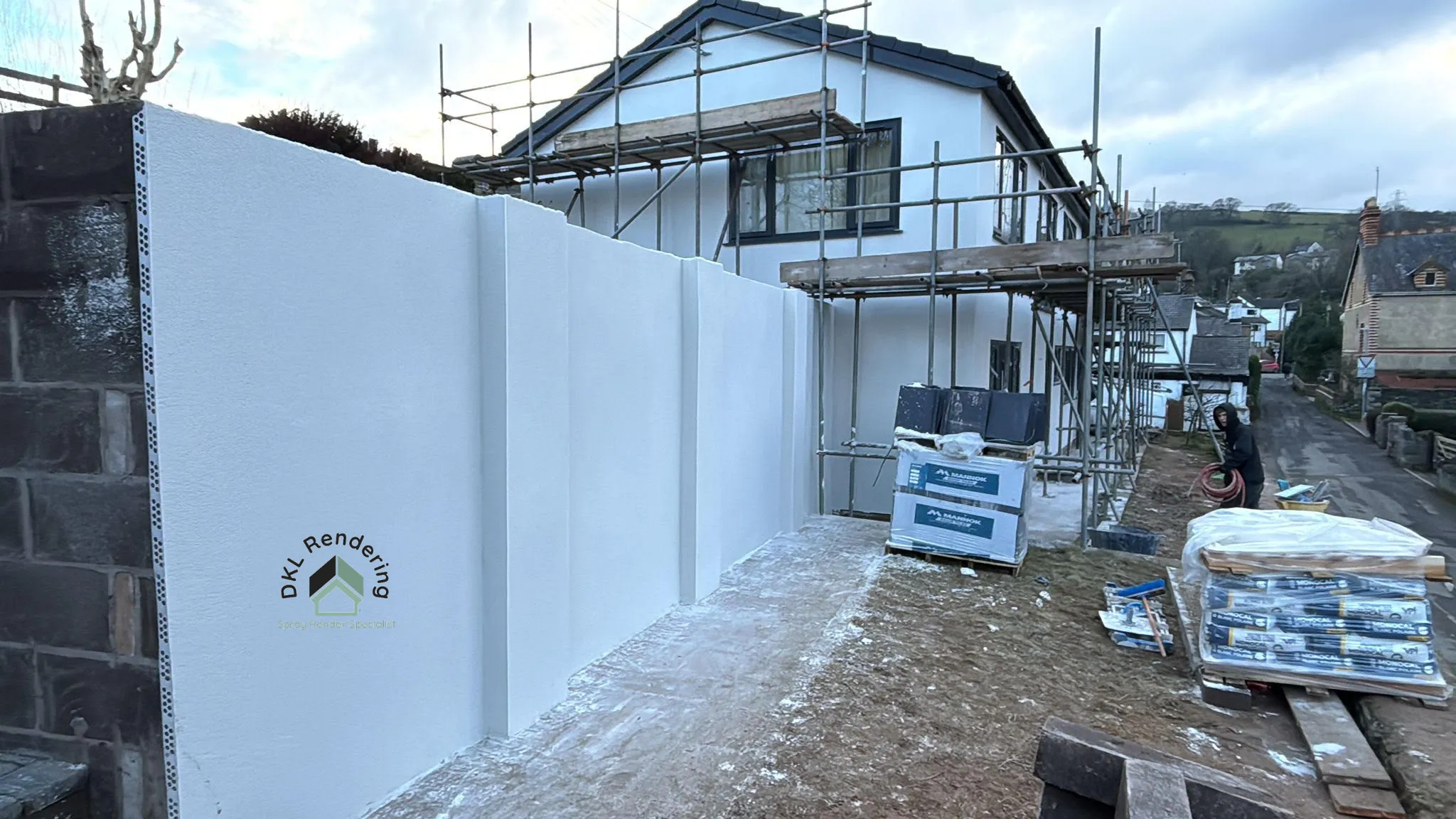
External Wall Insulation Done Properly
External wall insulation does two jobs at once. Insulation boards are fixed to the outside of your walls, then a full render system goes over the top: mesh, basecoat and a silicone or monocouche finish. Your house holds its heat and gets a whole new look in the same job. We've been rendering houses across the Fylde Coast for over 15 years, and this is where that experience really earns its keep.
It makes the biggest difference on solid-wall and older properties, and the Fylde Coast has plenty of both. If your house was built before cavity walls became standard, you can't insulate the walls from inside the cavity because there isn't one. Wrapping the outside is the practical answer, and because the finish coat is a proper render system, the house ends up looking better than it did before.
We're based in Thornton-Cleveleys and cover Blackpool and the whole Fylde Coast. We're fully insured with public liability cover, we fit K-Rend, Weber and traditional sand and cement systems, and every job starts with a free written quote, usually with you within 48 hours. If you've been searching for renderers near me and wondering whether insulated render is worth it, give us a ring on 07394 854 401 and we'll talk it through.
- Warmer house, lower heating bills
- Insulation and a brand new finish in one job
- Ideal for solid-wall and older properties
- Finished in silicone or monocouche render
- Helps with condensation and cold spots
- Fully insured with public liability cover
How an Insulated Render System Goes Together
The build-up matters more than anything else on this job. First the walls are prepped and any loose render or blown patches are sorted. Then rigid insulation boards are fixed to the outside of the house, bonded and mechanically fixed so they're going nowhere. Over the boards goes a basecoat with a reinforcing mesh bedded into it, which ties the whole system together and stops cracking.
The finish coat goes on last. Most people go for a spray-applied silicone like K-Rend for the self-cleaning surface, or a through-coloured monocouche if they'd rather never think about paint. We work with K-Rend, Weber and traditional sand and cement, so the top coat is chosen to suit your house and your budget, not whatever happens to be on the van.
Warmer House, Lower Bills, Less Condensation
Solid walls lose a lot of heat. Wrap them in insulation and the difference is simple: rooms warm up faster, stay warm longer and the boiler doesn't have to run flat out to keep up. You feel it most in the rooms that were always cold, the ones on the gable end or facing the sea wind.
Condensation is the other big one. Black spots in corners and mould behind wardrobes usually come down to cold wall surfaces. Warm, damp indoor air hits a cold wall and the moisture drops out onto it. Insulating from the outside keeps the inner face of the wall warm, so there's nowhere cold for that moisture to land. Cold spots fade, and the walls get a chance to stay dry.
Which Houses Suit External Wall Insulation
Solid-wall houses get the most out of it. Pre-war terraces and older semis were built without a cavity, so there's nothing to inject and the outside is the only sensible place to put insulation. A good share of the housing stock across Blackpool, Cleveleys and the rest of the Fylde Coast falls into that bracket. If your house is always cold no matter what the heating does, this is probably why.
It's not just solid walls though. Older cavity homes with tired brickwork, houses covered in cracked pebble dashing or roughcast, and extensions that were never insulated properly all suit an insulated system. If you were already thinking about re-rendering or pebble dash removal, it's worth pricing the insulated version at the same time. The scaffolding is up and the walls are stripped either way, so it's the cheapest moment you'll ever have to add insulation.
Finishes, Timescales and Honest Pricing
Once it's finished, nobody can tell there's insulation under there. The house just looks freshly rendered. You choose the top coat the same way you would on any house rendering job: K-Rend silicone in a huge range of colours if you want a self-cleaning surface that lasts 25 to 30 years, or a through-coloured monocouche if you want texture and no paint. Sills and details are made good so everything sits right with the thicker walls.
The job itself runs like any big render project. Scaffolding up, walls prepped, boards on, mesh and basecoat, then the finish. Most straight rendering jobs take 3 to 7 days; with boards there's an extra stage, so allow a bit longer and we'll give you a proper timescale with the quote. We keep the site tidy while we're there and clear up after ourselves when we're done.
On price, we'll be straight with you: this is a bigger job than render alone. A standard re-render on a typical 3-bed semi runs roughly £3,000 to £6,000 depending on the system and the prep, and adding insulation boards sits above that. Every house is different, so we price it on a proper survey rather than guessing over the phone. The quote is written, it's free and it usually lands within 48 hours.
External Wall Insulation FAQs
More than a straight render, because there's the boards and an extra stage of work on top of the normal system. As a rough anchor, rendering alone on a typical 3-bed semi runs £3,000 to £6,000, and an insulated system sits above that. We survey the house and give you a free written quote, usually within 48 hours, so you get a real number, not a guess.
Longer than render on its own. Most straight rendering jobs take 3 to 7 days, and fitting boards adds an extra stage before the mesh, basecoat and finish go on. The exact timescale depends on the size of the house and the weather, so we put it in writing with your quote.
Usually, yes, with a bit of planning. The boards can go on in most conditions. It's the basecoat and finish that need reasonable temperatures and a dry window to cure properly, so we watch the forecast and won't spray a top coat in frost or driving rain. After more than 15 years working this coast, we're used to planning around the weather.
The finish is the same render system we'd put on any house, so it lasts just as long. A K-Rend silicone top coat is good for 25 to 30 years with barely any maintenance, and rain keeps the surface clean. The boards underneath don't wear out; they just sit there doing their job as long as the render above them stays sound.
Both work well over insulation boards. Silicone, like K-Rend, is flexible, self-cleaning and shrugs off the coastal weather, which is why it's our usual recommendation this close to the sea. Monocouche is through-coloured, so scuffs don't show a different colour underneath, and it never needs painting. We'll look at your house and tell you straight which one suits it.
External Wall Insulation Where You Are
We cover the whole Fylde Coast from our base in Thornton-Cleveleys. Pick your town for local details.
Cleveleys
External Wall Insulation in Cleveleys, covering Anchorsholme and Norbreck.
→Thornton
External Wall Insulation in Thornton, covering Little Thornton and Burn Naze.
→Carleton
External Wall Insulation in Carleton, covering Norcross.
→Blackpool
External Wall Insulation in Blackpool, covering South Shore and North Shore.
→Bispham
External Wall Insulation in Bispham, covering Norbreck and Little Bispham.
→Fleetwood
External Wall Insulation in Fleetwood, covering The Mount area and Rossall.
→Poulton-le-Fylde
External Wall Insulation in Poulton-le-Fylde, covering Staining and Hardhorn.
→Knott End
External Wall Insulation in Knott End, covering Preesall and Hambleton.
→Lytham St Annes
External Wall Insulation in Lytham St Annes, covering Lytham and St Annes.
→Kirkham
External Wall Insulation in Kirkham, covering Wesham and Wrea Green.
→Freckleton
External Wall Insulation in Freckleton, covering Warton and Newton.
→Great Eccleston
External Wall Insulation in Great Eccleston, covering Elswick and Inskip.
→Garstang
External Wall Insulation in Garstang, covering Catterall and Bonds.
→Preston
External Wall Insulation in Preston, covering Fulwood and Ashton-on-Ribble.
→Penwortham
External Wall Insulation in Penwortham, covering Lower Penwortham and Higher Penwortham.
→Related Services
Silicone Rendering
K-Rend silicone render that cleans itself in the rain and stands up to coastal weather.
→Monocouche Render
One-coat through-coloured render that never needs painting and holds its colour for the long haul.
→Spray Rendering
Machine-applied render for a faster, more even finish on full re-renders, new builds and big elevations.
→